Year
2024
Type
Ideation, Prototyping, Design, Programming, Team Leader
QUI is an intelligent table tennis training system developed within a six week team project to enable rally based practice without an opponent. Working in a team of six, we designed a machine that detects active rallies and launches a new ball only when the exchange ends. My role focused on coordinating development and shaping the technical structure while contributing to concept design, electronics and prototyping. The result is a functioning training prototype capable of generating spin variations and reacting to the player.
01 — Problem
Training without an opponent.
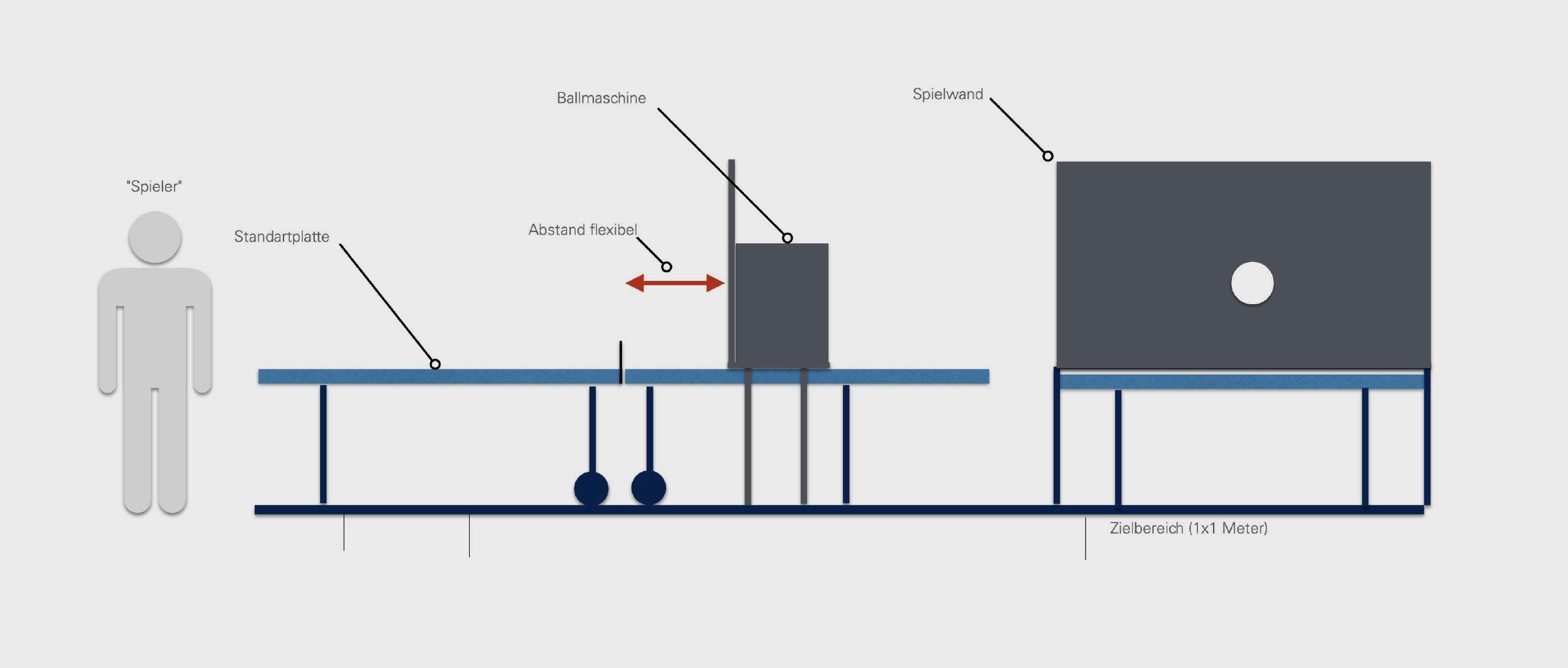
Table tennis training often depends on a second player. Without a partner the rhythm of a rally disappears and practice quickly becomes repetitive. The challenge of this project was to create a machine that enables solo players to experience a real rally. Instead of simply launching balls, the system detects whether the player returns the shot and continues the exchange. Within six weeks our team developed a working system that recognizes rallies through vibration sensors and releases a new ball only when the exchange ends.
01 — Problem
Training without an opponent.
Table tennis training often depends on a second player. Without a partner the rhythm of a rally disappears and practice quickly becomes repetitive. The challenge of this project was to create a machine that enables solo players to experience a real rally. Instead of simply launching balls, the system detects whether the player returns the shot and continues the exchange. Within six weeks our team developed a working system that recognizes rallies through vibration sensors and releases a new ball only when the exchange ends.
01 — Problem
Training without an opponent.
Table tennis training often depends on a second player. Without a partner the rhythm of a rally disappears and practice quickly becomes repetitive. The challenge of this project was to create a machine that enables solo players to experience a real rally. Instead of simply launching balls, the system detects whether the player returns the shot and continues the exchange. Within six weeks our team developed a working system that recognizes rallies through vibration sensors and releases a new ball only when the exchange ends.
02 — Context
Starting at the drawingboard.
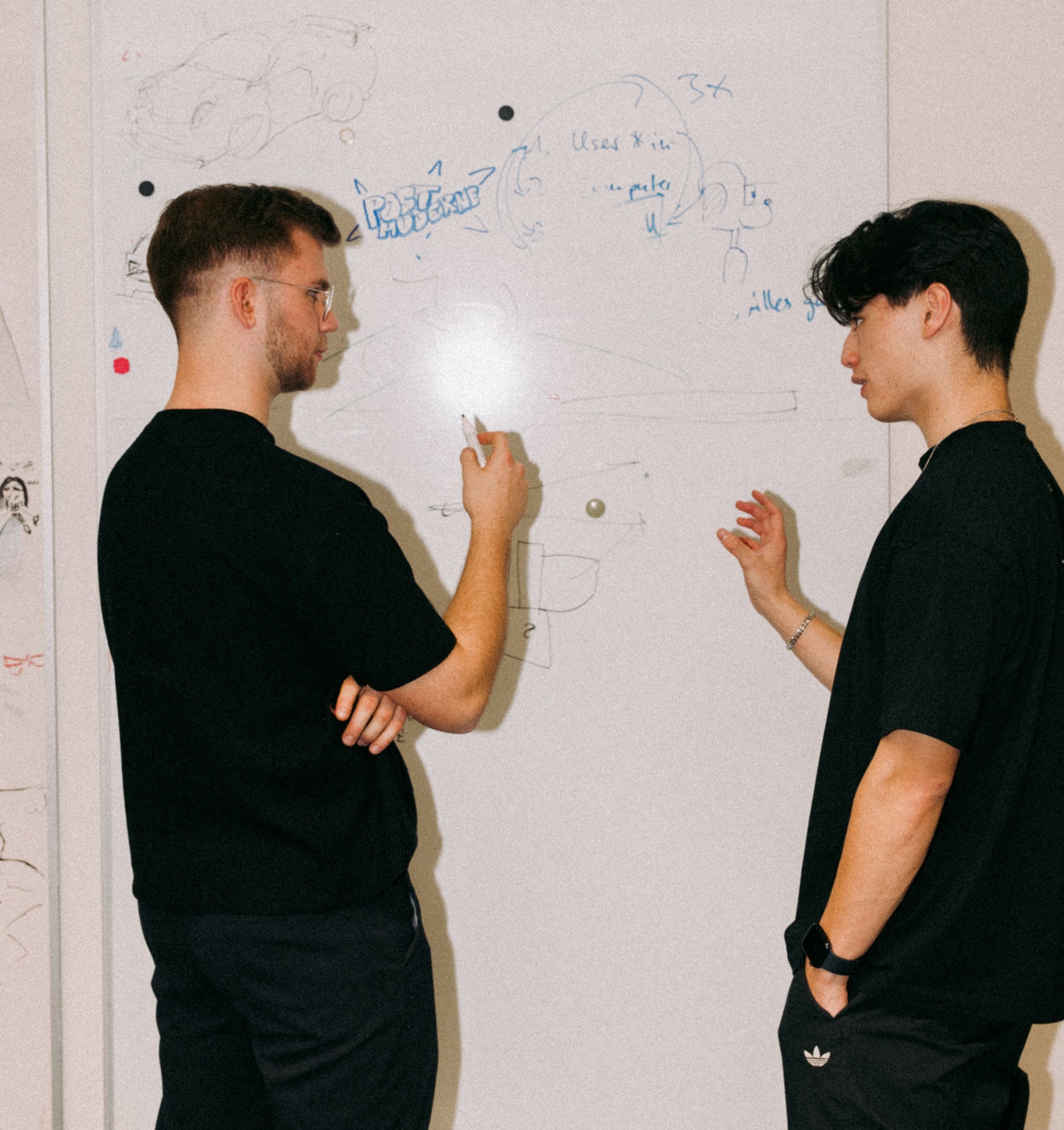
The project required fast decisions and careful planning. With a budget of one thousand euros and only three purchase requests every component had to be considered early. I took responsibility for coordinating the team, organizing orders and aligning development with the tight schedule. To avoid getting stuck in theory we quickly moved into prototyping and tested mechanisms from the very beginning.
02 — Context
Starting at the drawingboard.
The project required fast decisions and careful planning. With a budget of one thousand euros and only three purchase requests every component had to be considered early. I took responsibility for coordinating the team, organizing orders and aligning development with the tight schedule. To avoid getting stuck in theory we quickly moved into prototyping and tested mechanisms from the very beginning.
02 — Context
Starting at the drawingboard.
The project required fast decisions and careful planning. With a budget of one thousand euros and only three purchase requests every component had to be considered early. I took responsibility for coordinating the team, organizing orders and aligning development with the tight schedule. To avoid getting stuck in theory we quickly moved into prototyping and tested mechanisms from the very beginning.
03 — Process
Many roles at once.
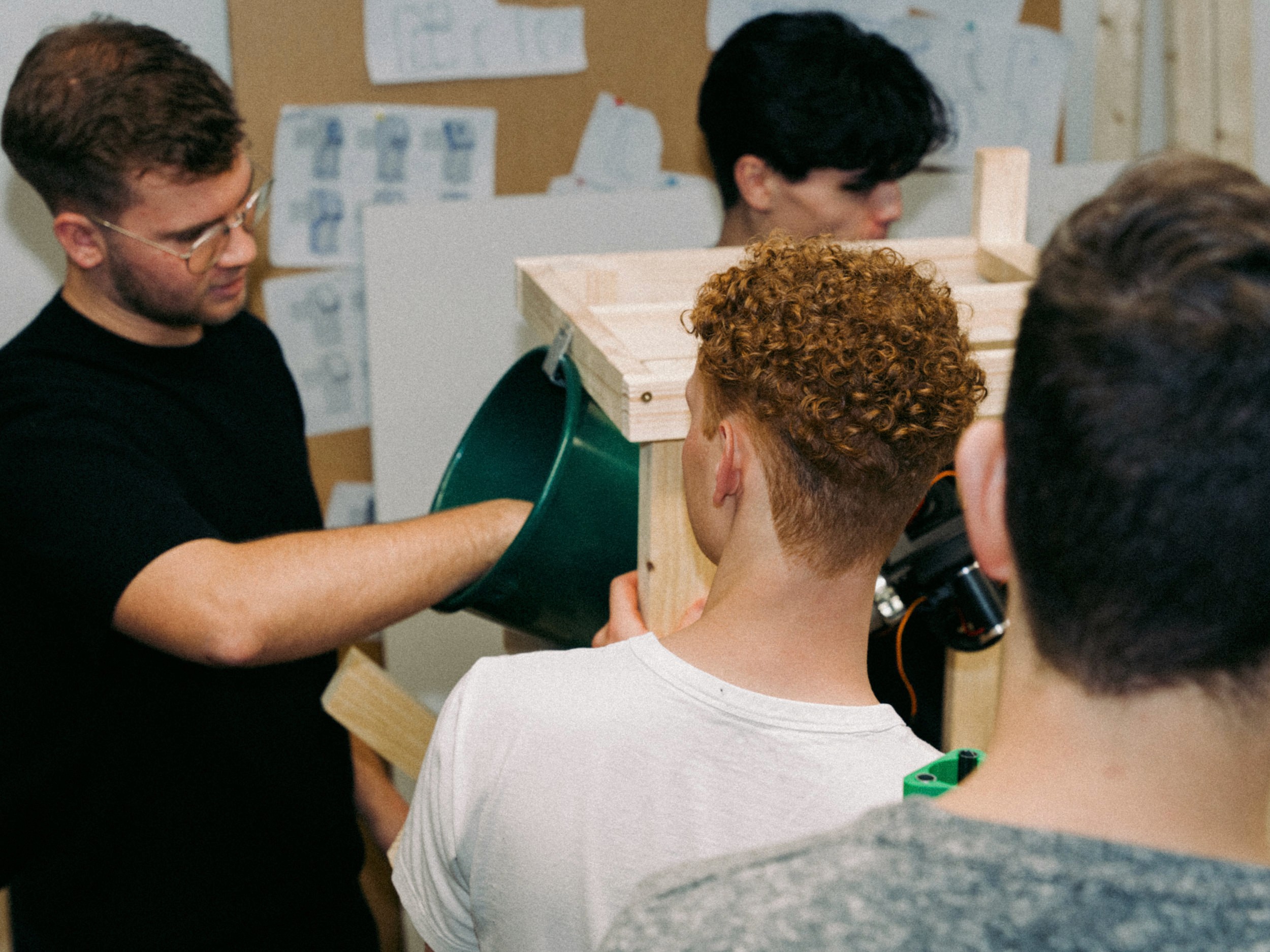
The development process combined design, electronics and programming at the same time. I supported concept development, helped structure the electronic system and contributed to early programming and mechanical ideas. Rather than separating disciplines the project evolved through constant collaboration and quick iteration.
03 — Process
Many roles at once.
The development process combined design, electronics and programming at the same time. I supported concept development, helped structure the electronic system and contributed to early programming and mechanical ideas. Rather than separating disciplines the project evolved through constant collaboration and quick iteration.
03 — Process
Many roles at once.
The development process combined design, electronics and programming at the same time. I supported concept development, helped structure the electronic system and contributed to early programming and mechanical ideas. Rather than separating disciplines the project evolved through constant collaboration and quick iteration.
04 — Experiments
Building the core mechanism.
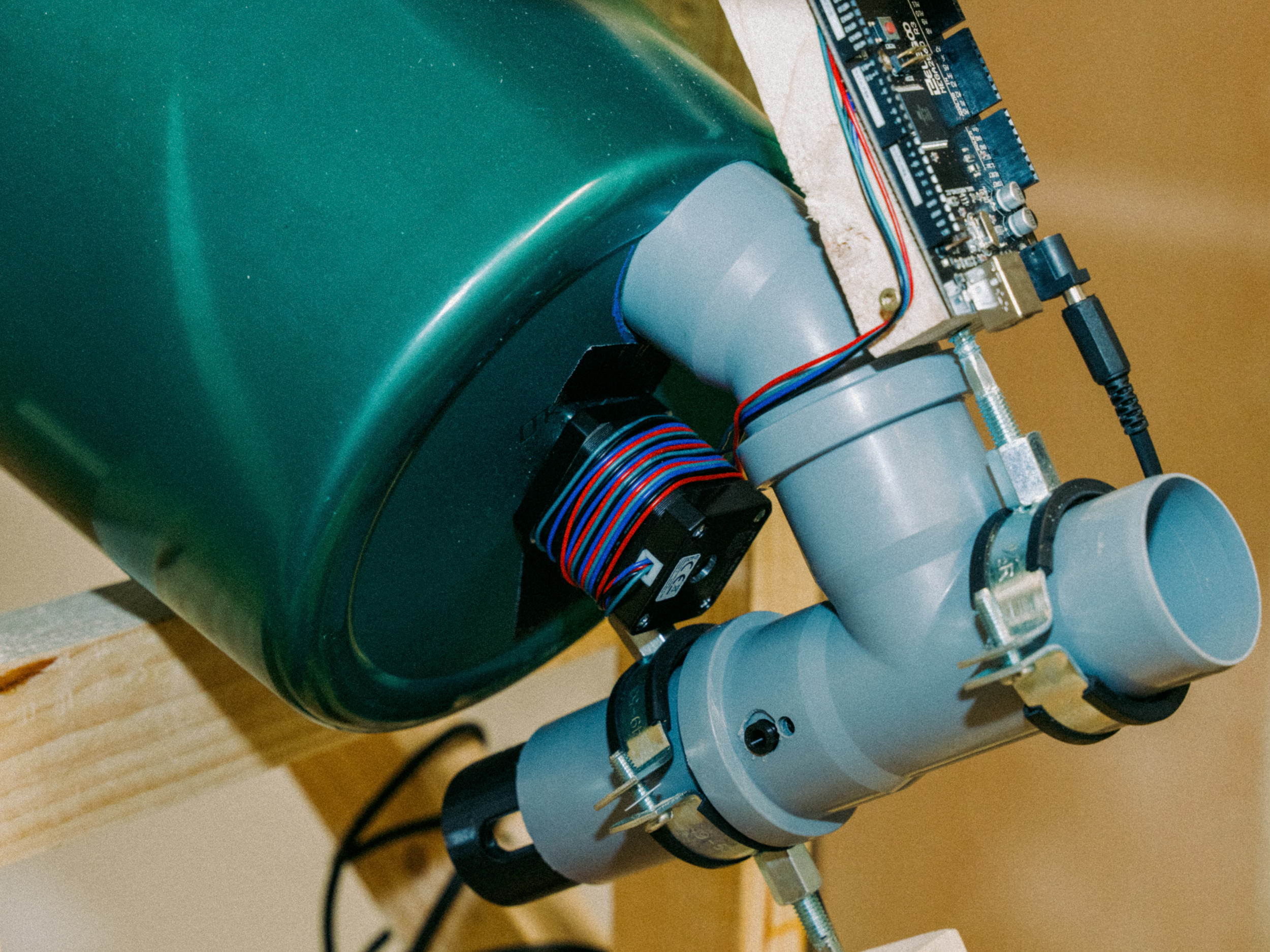
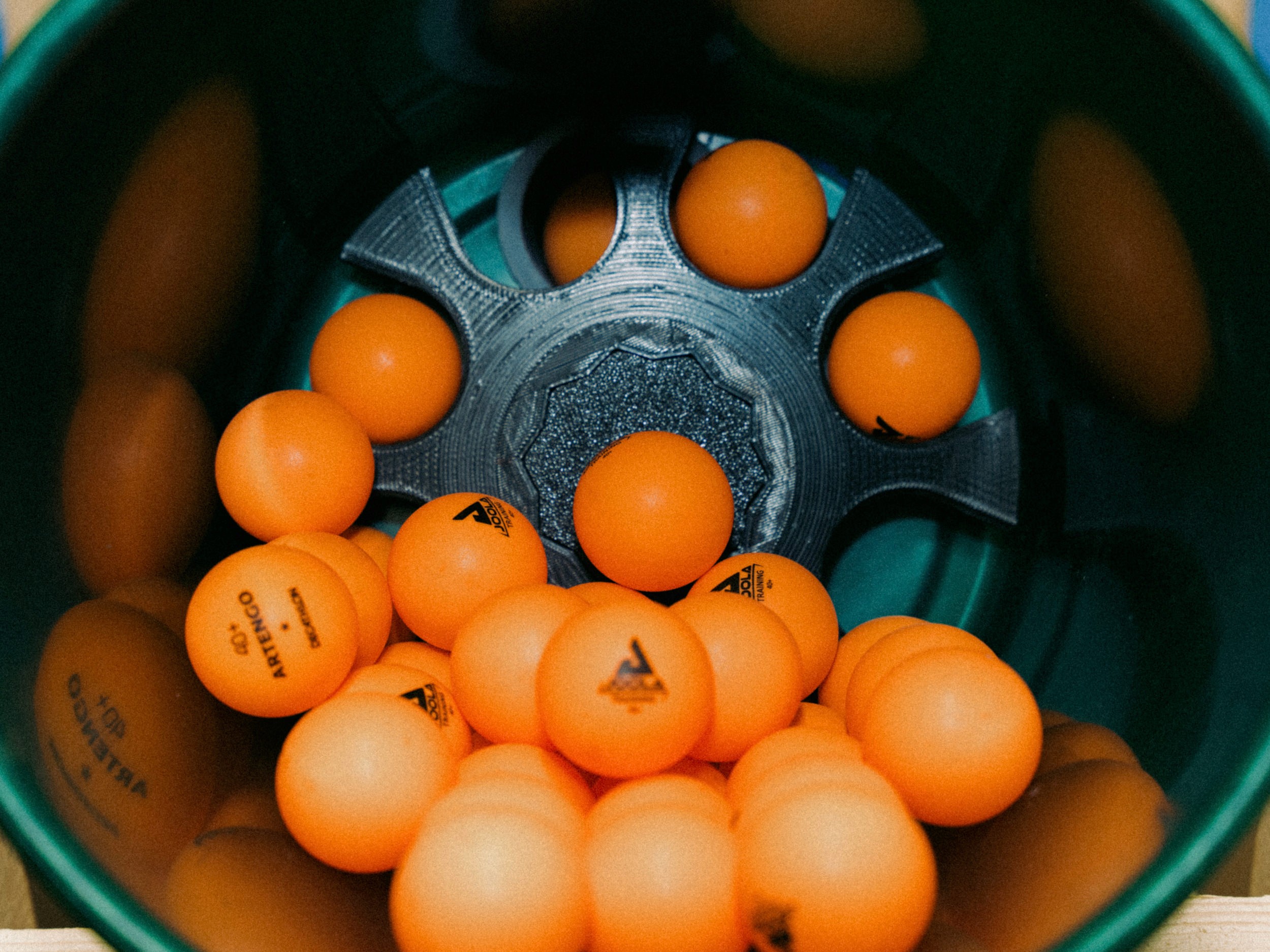
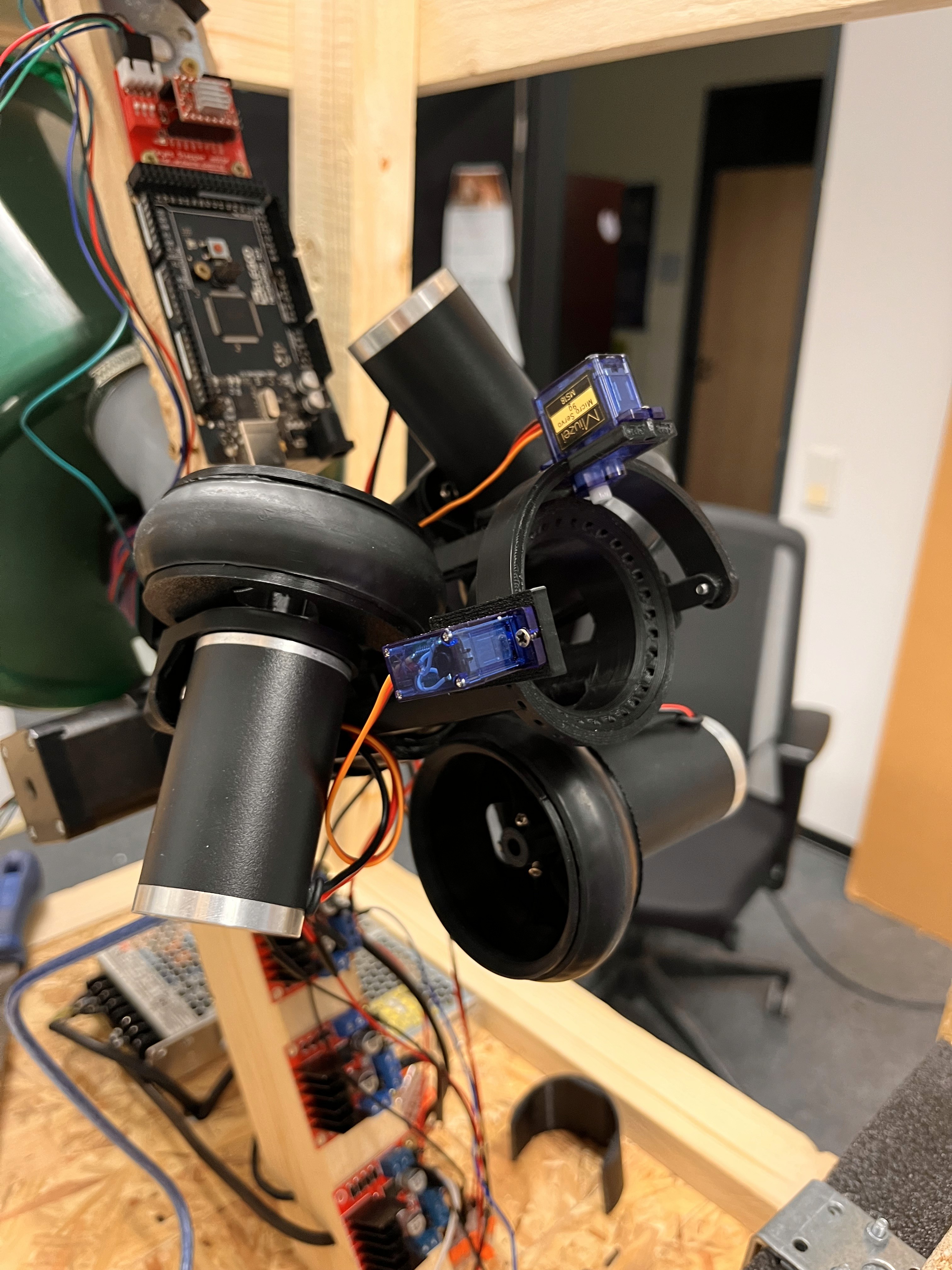
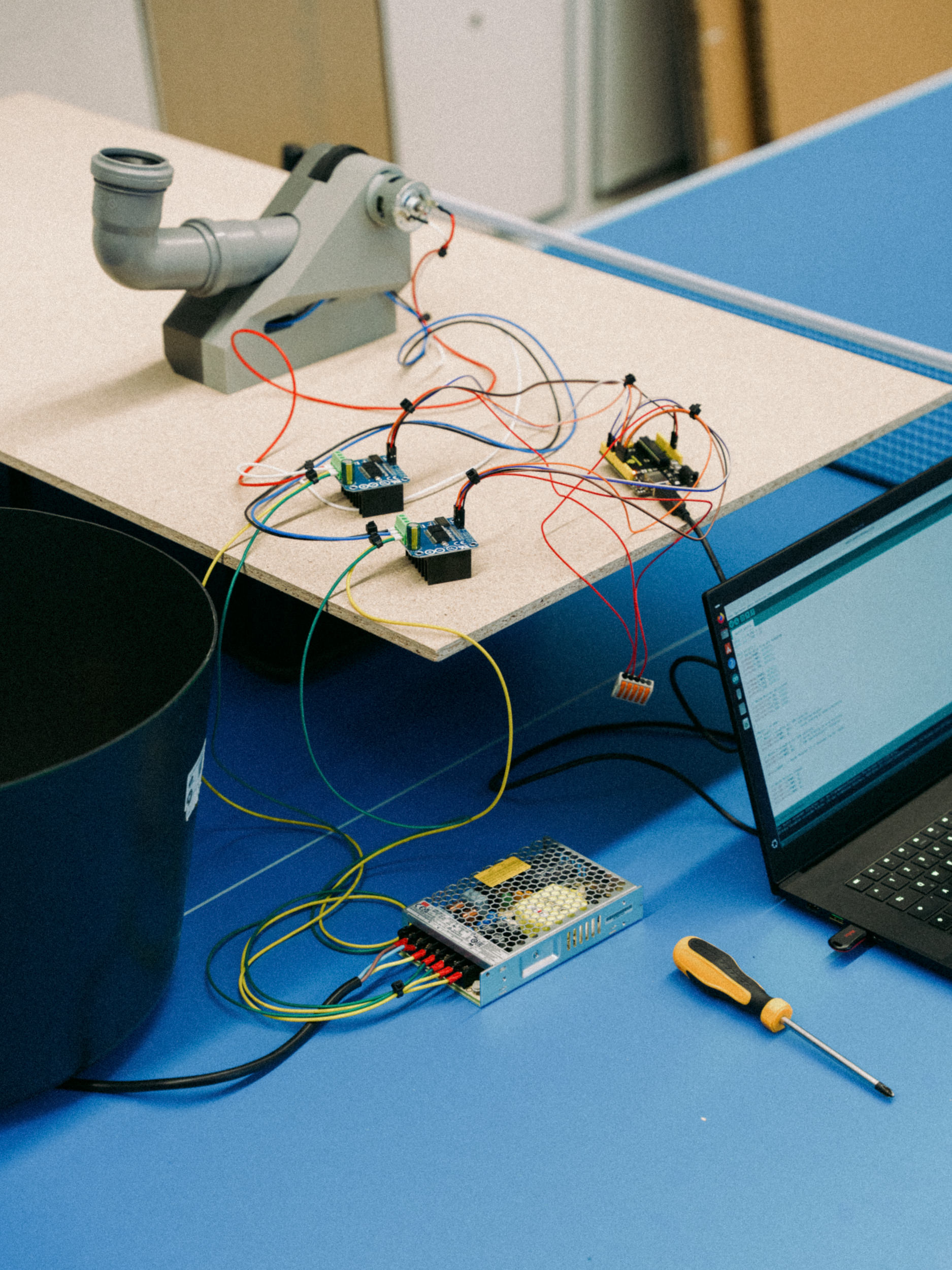
The central launch system of the machine was called Trinity. Three motors with rubber wheels generate different spin variations to simulate realistic table tennis shots. Additional servo motors adjust the direction of the ball. A key innovation is the ball handling system which allows the machine to use every ball inside the container, even the final one.
04 — Experiments
Building the core mechanism.
The central launch system of the machine was called Trinity. Three motors with rubber wheels generate different spin variations to simulate realistic table tennis shots. Additional servo motors adjust the direction of the ball. A key innovation is the ball handling system which allows the machine to use every ball inside the container, even the final one.
04 — Experiments
Building the core mechanism.
The central launch system of the machine was called Trinity. Three motors with rubber wheels generate different spin variations to simulate realistic table tennis shots. Additional servo motors adjust the direction of the ball. A key innovation is the ball handling system which allows the machine to use every ball inside the container, even the final one.
05 — Concept
From prototype to playable system.
The final prototype demonstrates a fully functioning training machine capable of launching table tennis balls with different spin variations. At the same time the system recognizes active rallies through vibration sensors in the rebound panel. As long as the exchange continues the machine waits before introducing the next ball.
05 — Concept
From prototype to playable system.
The final prototype demonstrates a fully functioning training machine capable of launching table tennis balls with different spin variations. At the same time the system recognizes active rallies through vibration sensors in the rebound panel. As long as the exchange continues the machine waits before introducing the next ball.
05 — Concept
From prototype to playable system.
The final prototype demonstrates a fully functioning training machine capable of launching table tennis balls with different spin variations. At the same time the system recognizes active rallies through vibration sensors in the rebound panel. As long as the exchange continues the machine waits before introducing the next ball.
06 — Engineering
Designing through rapid iteration.
Many components were designed digitally and produced through rapid prototyping. Using CAD and 3D printing allowed us to create precise parts within hours. This enabled fast testing and quick improvements. Design and engineering evolved through continuous cycles of building, testing and refining.
06 — Engineering
Designing through rapid iteration.
Many components were designed digitally and produced through rapid prototyping. Using CAD and 3D printing allowed us to create precise parts within hours. This enabled fast testing and quick improvements. Design and engineering evolved through continuous cycles of building, testing and refining.
06 — Engineering
Designing through rapid iteration.
Many components were designed digitally and produced through rapid prototyping. Using CAD and 3D printing allowed us to create precise parts within hours. This enabled fast testing and quick improvements. Design and engineering evolved through continuous cycles of building, testing and refining.
07 — Prototype
Beyond the machine.
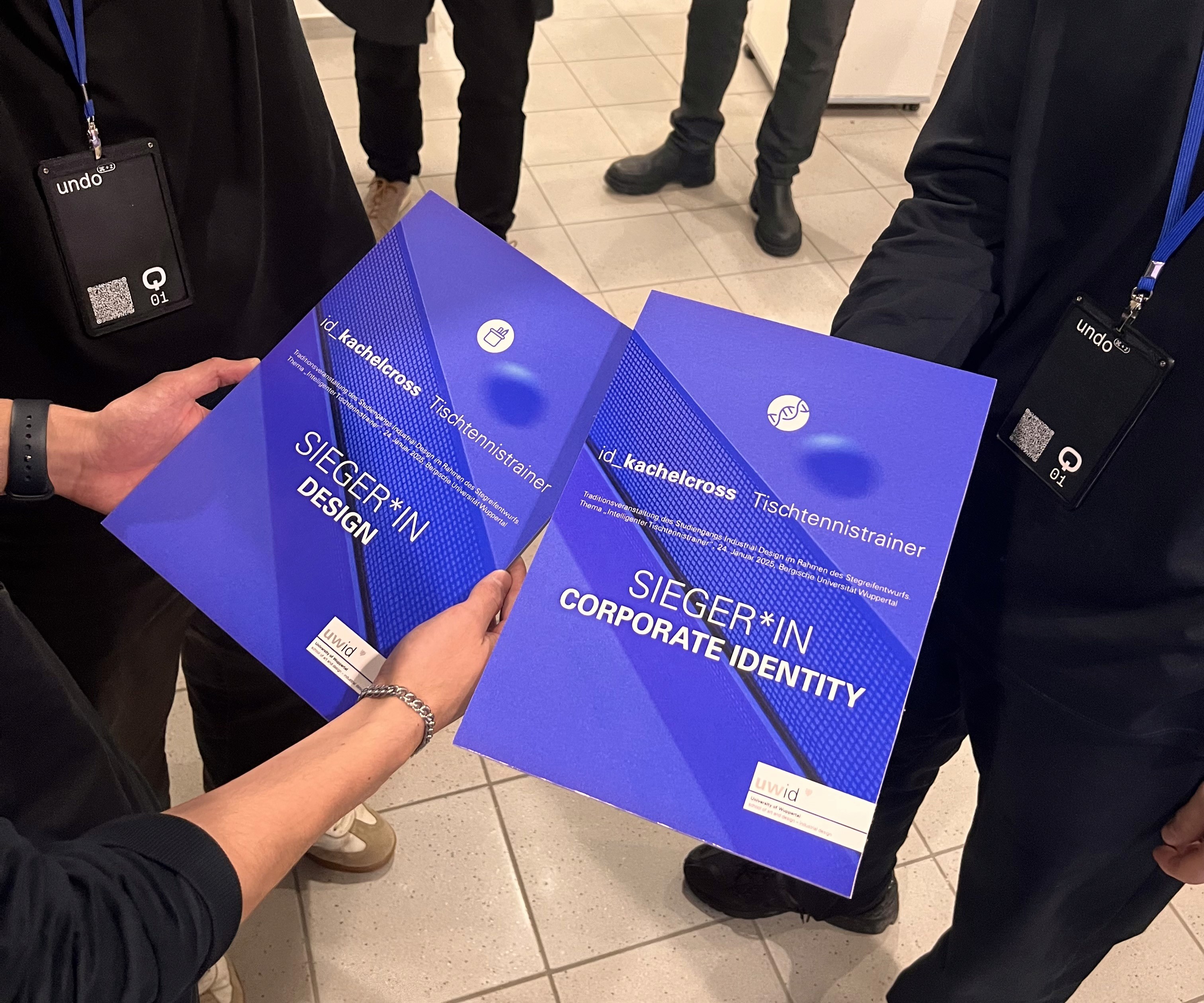
The project also included the development of a fictional design studio named Undo Design. Alongside the machine we created a visual identity, branded equipment and a short brand film presenting the concept. This expanded the project from a technical prototype into a complete design narrative.
07 — Prototype
Beyond the machine.
The project also included the development of a fictional design studio named Undo Design. Alongside the machine we created a visual identity, branded equipment and a short brand film presenting the concept. This expanded the project from a technical prototype into a complete design narrative.
07 — Prototype
Beyond the machine.
The project also included the development of a fictional design studio named Undo Design. Alongside the machine we created a visual identity, branded equipment and a short brand film presenting the concept. This expanded the project from a technical prototype into a complete design narrative.
Unfold Prozess
Presenting Qui
Reimagend Ping Pong
Presenting Qui
Reimagend Ping Pong
Presenting Qui
Reimagend Ping Pong
Feature 01
Using every ball.
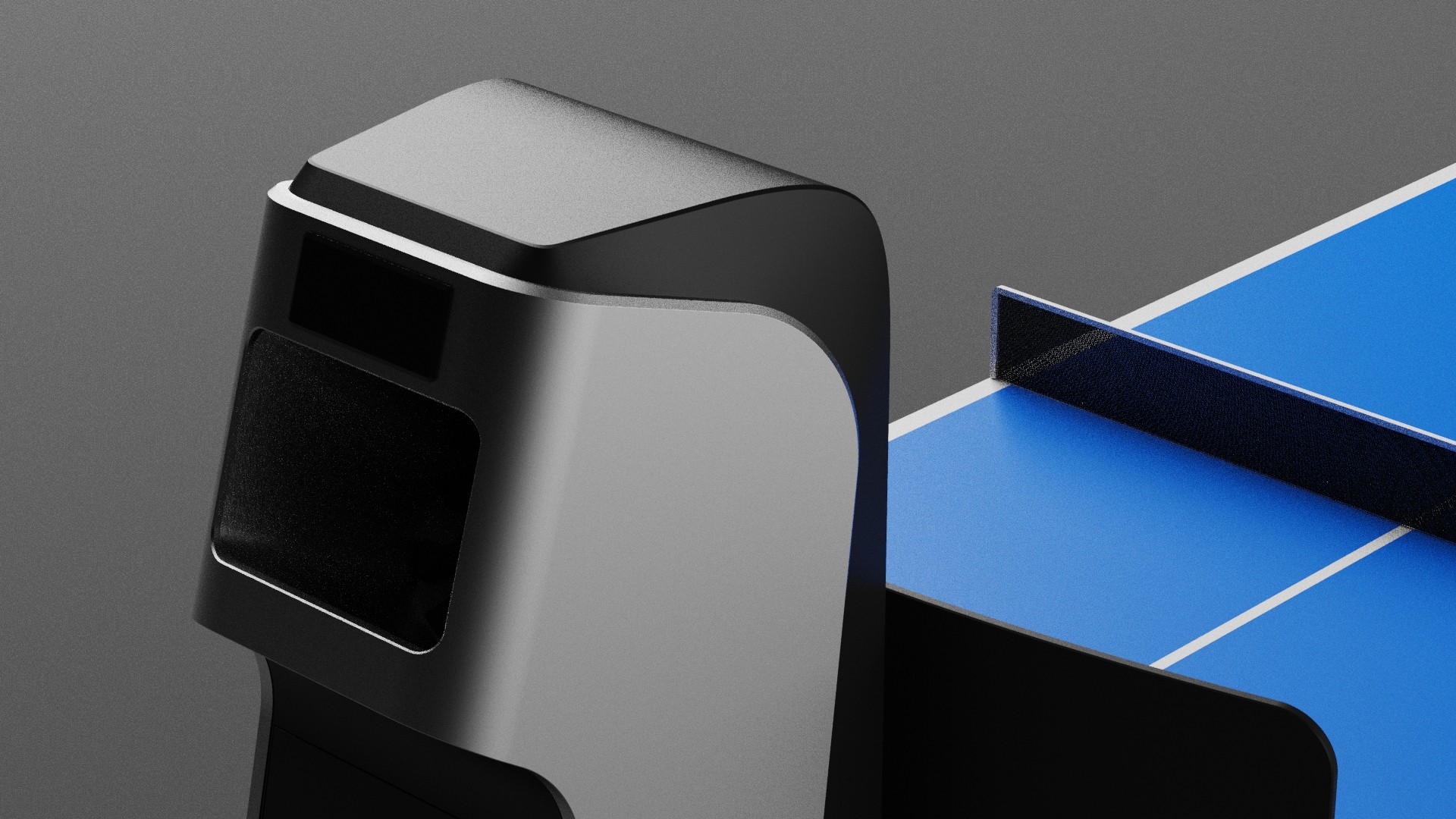
The machine uses an open container where players simply drop the balls inside. A rotating mechanism lifts each ball into a channel that feeds the launch system. This design ensures that every ball inside the container can be used, including the last one. Training continues without unused balls remaining in the system.
Feature 01
Using every ball.
The machine uses an open container where players simply drop the balls inside. A rotating mechanism lifts each ball into a channel that feeds the launch system. This design ensures that every ball inside the container can be used, including the last one. Training continues without unused balls remaining in the system.
Feature 01
Using every ball.
The machine uses an open container where players simply drop the balls inside. A rotating mechanism lifts each ball into a channel that feeds the launch system. This design ensures that every ball inside the container can be used, including the last one. Training continues without unused balls remaining in the system.
Feature 02
Folding rebound panel.
The rebound panel is stored inside the body of the machine when not in use, keeping the device compact and mobile. During play the panel unfolds and spans the width of the table. It returns the ball toward the player while also housing the vibration sensors. The machine quickly transforms from storage to active training mode.
Feature 02
Folding rebound panel.
The rebound panel is stored inside the body of the machine when not in use, keeping the device compact and mobile. During play the panel unfolds and spans the width of the table. It returns the ball toward the player while also housing the vibration sensors. The machine quickly transforms from storage to active training mode.
Feature 02
Folding rebound panel.
The rebound panel is stored inside the body of the machine when not in use, keeping the device compact and mobile. During play the panel unfolds and spans the width of the table. It returns the ball toward the player while also housing the vibration sensors. The machine quickly transforms from storage to active training mode.
Feature 03
Integrated storage.
Drawers inside the body store rackets, balls and table components. All equipment remains organized within the machine itself. The device therefore functions as both a training system and a storage unit.
Feature 03
Integrated storage.
Drawers inside the body store rackets, balls and table components. All equipment remains organized within the machine itself. The device therefore functions as both a training system and a storage unit.
Feature 03
Integrated storage.
Drawers inside the body store rackets, balls and table components. All equipment remains organized within the machine itself. The device therefore functions as both a training system and a storage unit.
Feature 04
Ready to play.
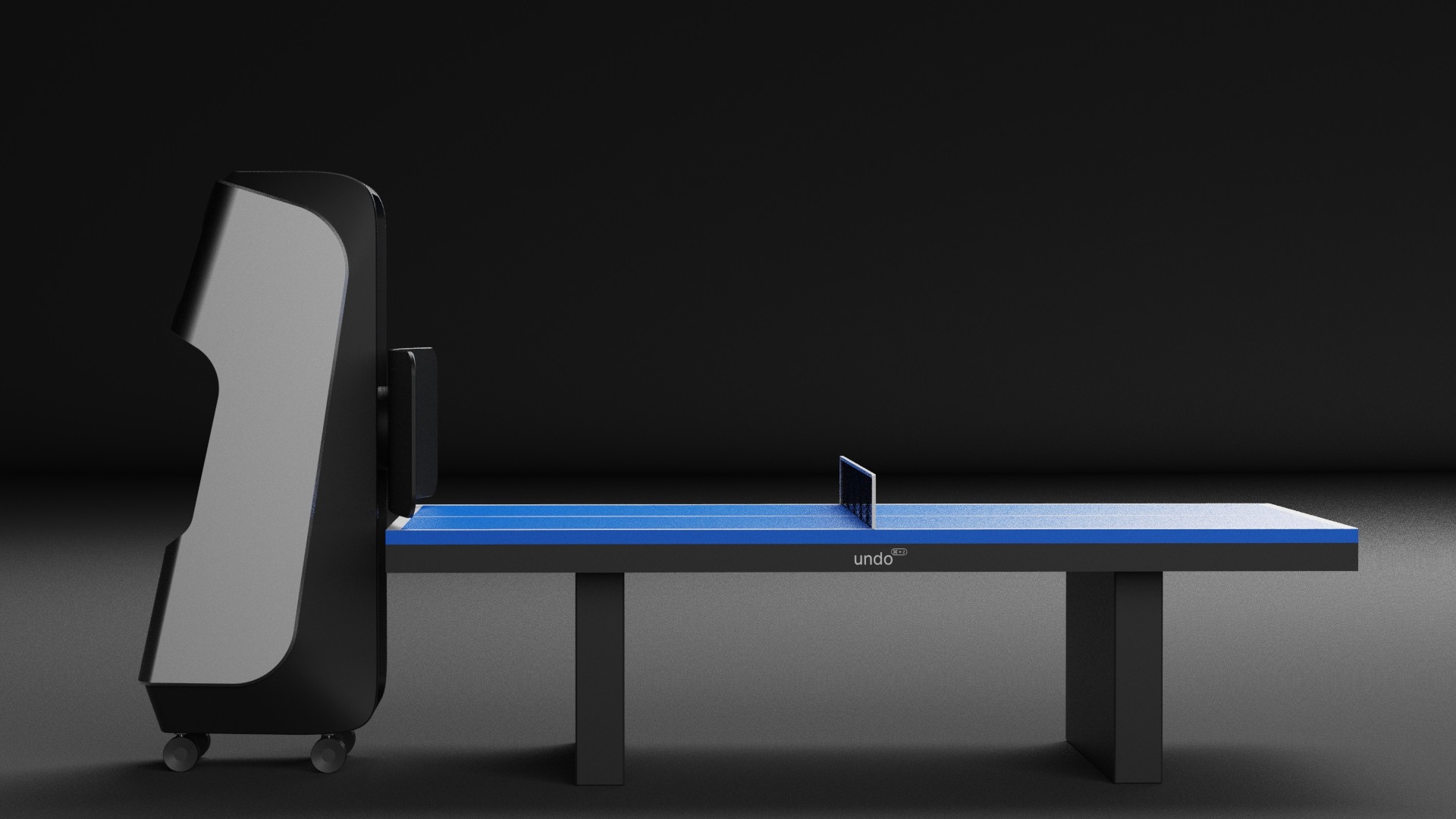
Placed next to the table the machine aligns directly with the playing surface. The rebound panel rests on the table while the launcher sends balls back into the rally. With a single activation the machine becomes an autonomous training partner.
Feature 04
Ready to play.
Placed next to the table the machine aligns directly with the playing surface. The rebound panel rests on the table while the launcher sends balls back into the rally. With a single activation the machine becomes an autonomous training partner.
Feature 04
Ready to play.
Placed next to the table the machine aligns directly with the playing surface. The rebound panel rests on the table while the launcher sends balls back into the rally. With a single activation the machine becomes an autonomous training partner.